Join the mailing list plus receive your free How to Become a Successful Coach Starter Kit.
Join + get your Starter Kit
Real people. Real stories. Real success. With Rashid Mubashir.
© 2026 How to Become a Successful Coach
Real people. Real stories. Real success. With Rashid Mubashir.
Leadership is not something you do. It is someone you become.
Mary Jensen has spent 40 years in leadership, the good, the bad and the ugly. She rose to financial controller by 25, ran mergers and acquisitions, and, by her own admission, was a control freak and a perfectionist. Then everything changed. In this conversation she and Rashid unpack why so many capable managers never become leaders, why leadership is an inside job, and how the patterns we form as far back as childhood quietly shape the way we lead. Honest, practical, and full of turning points.
Leadership is not a set of tasks to master. It is who you choose to be. It lives in the being, not the doing.
Being promoted for your skills makes you a manager, not a leader. Leadership begins the moment you step back and start to empower others.
The way you lead is shaped by patterns formed long before your career began. Getting curious about them is the first step to changing them.
Awareness on its own is just information. Real change comes from practising a new way of showing up, again and again.
A leader is the emotional anchor of a team. The culture around you is a reflection of the inner work you have, or have not, done.
Prefer to read? Download the transcript, or open it right here.
Welcome to this episode of the podcast. I am here today, your host Rashid, with the wonderful Mary Jensen, who is a leadership and performance consultant. Mary is a former professional coach here at the International Coaching Institute as well, and a lifetime member, a lifetime, which is absolutely phenomenal. We are sitting here today with Mary to talk all things leadership, how organizations work, how people function, how change is created, and how transformation works at a bigger scale. Welcome to this podcast. Mary, I'm so pleased you're here.
Thank you. It's wonderful to be here. It feels like I'm walking in here. It absolutely changed my life.
Oh, that's so lovely. Thank you for that. And then I hear that as not only a compliment, but as something I can resonate with. Because you and I, we were in the same training room, so just fantastic training together.
Absolutely. So, Mary, let's go straight deep into the world of leadership. Let's start with you've been in this space for over a decade now or about a decade. Training.
Training. Wow. Okay, so but I lived in this space for 30 years before that. That's phenomenal. So now I have 40 years for us. Class of leadership. The good, the bad and the ugly.
That's amazing. So good. So let's start with the most iconic, perplexing, yet simple and profound question that so many people writers, teachers, experts, researchers have attempted to answer. What is leadership?
Big question and broad, but putting it as simply as possible. Leadership is an internal vibration. It's an internal capacity that helps us impact, influence and inspire others. But it's internal. So many people think, what do I need to learn? What steps do I need to do? We talked about frameworks off camera before we started having a fantastic chat, and people are looking for the external. What do I need to do to be a better leader? But the whole key is who do you need to be? It's in the being, not the doing. That's awesome.
I love that. It sounds quite simple and profound at the same time, but I know there's a lot more depth to it. And you've been doing this work as a coach, as a consultant, as a trainer. I'm curious when you say being and you the word vibration and you also alluded to it's an internal job. I find a lot of times that people who are not as deep into this work as you and I might be, or hundreds of other coaches in the community might be when they hear that language, they're not very clear on what does that mean, because we have an experience of what that's like. But imagine if someone who's a who's a mum or who's a manager or a supervisor or a CEO of a company whose built it from scratch up all the way to the top when they hear it, the chances are a lot of these people have built it from the external experience of their life. How would you describe that inner being and sense of vibration and inner work of leadership to them?
So firstly, it's going to give us an experience and that's the best thing because we learn a lot through contrast. Tell me more. Let me paint you a picture. I moved out of home when I was 15. I became a finance manager by the time I was 20. And a financial controller by the time I was 25. I ran around in some very crazy organizations. I did mergers and acquisitions for the last eight years of my finance career, but I worked mostly in construction and manufacturing. So very male oriented mass organizations, masculine energy, and I was masculine. I was a control freak. I micromanaged everything.
Yeah, this is in a position of leadership, in a position of leadership, actually, in a position of management. I didn't have leadership. I didn't even know what was possible with leadership at that point. Would you say it was a position of leadership by title at least?
Yes. Yeah, yeah. But the being of the leadership was still missing. No, no. So many, many people are promoted because they're a great technician and they become a manager. But that doesn't make you a leader.
Yeah. You have skills to be in management and you have some skills to be able to teach tasks, but that's management. It's certainly not leadership. So the very difference in leadership is you need to step backwards. Leadership is about empowering the people that you're with. Leadership is about being curious. You talked about curiosity already, which I love. And curiosity is that comes in. Now 0 to 7 imprint if at three years old when we said why why why why why to our parents. If that was shut down, our curiosity got shut down. And to be a leader, you need to learn how to be curious again. You need to learn to say no. Yeah, those sorts of things.
That's really good. Because what I'm hearing is that a lot of our imprint period has an impact on how we lead people. So when you say it's an in a job or it's a sense of being, what we're really going for is how do you show up for yourself? How do you define your own standards of how you're going to show up? And who are you going to be towards people that transcends what you're going to do?
Yeah, yeah. So my first experiences were to start watching people that I thought did it well and trying to capture what they did, but I was still in doing mode, not in being mode. So you know, I followed Richard Branson, I followed Oprah Winfrey. They all had a gratitude practice training here at ICI. You taught about a gratitude practice. So here I am. I'm 45 years old. I don't know, somewhere between 45 year round, about 40. And I'm like, I'm grateful for Stephanie. I'm grateful for Adrian. I'm grateful for Derek, and I'll be grateful when this gratitude practice starts to work.
And I did that for about 18 months because I knew that the people doing that had success. So there was a key in their success. Leaves clues. Yes, there had to be a key in there, but for me, I just added an extra chore to my already extensive to do list. I was not being grateful. I was trying to do gratitude.
Completely different. Something switched at about the 18 month mark and I started to become grateful. I used to meditate while I was on the treadmill. Used to think I was smart. I'm knocking off two things that we need to do at once, and till I learned that I wasn't being present to either activity. So I think leadership is a lot about presence. It's about curiosity. It's about listening. It's about stepping back. It's about feeling, about creating space for all of that to happen as well. Would you say?
Yeah, yeah, because a lot of people get busy in leadership. They think managing stuff and getting people to do things and doing the tasks and writing the emails and whatever else is leadership. And I think that is from an implementation point of view. But I love how you are now going within its presence, of how you are feeling and what emotional experience you create for people. Now it talks about vibration and you did ask about that. Yes.
So we're magnetic beings. And if you talk to the finance, me and I started to talk about this stuff, I probably would have terminated you. So all the words that we use now I wouldn't have had a clue about. I didn't have the language for it. I didn't have the vocabulary. I didn't have the feeling state to understand what vibration meant. But what I know now is, if I'm happy, if I'm feeling good, if I'm feeling present, if I'm feeling open, I'm magnetic. People are attracted to me. If I'm feeling closed down, if I'm feeling guarded, if I'm feeling resentful or frustrated, I'm repulsive. I'm pushing people away.
Yeah. So if I think about that in a leadership context, if a CEO or a manager is feeling resentful or frustrated, that vibration is going to spread. Everyone in the organization is going to feel that. They're going to feel it. They're going to internalize it and they're going to pass it on. Yeah.
That's really interesting. So there's the viral effect of the emotional state of the leader spreading through the organization.
Yeah. Yeah. And so that's why I say leadership is an internal vibration because the feeling state that you're in, the belief that you run your life from, the values that you hold, all of those things create a vibration that people pick up on and they either become magnetic to you or they're repulsed by you. It's that simple.
Right. So the more work that a leader does internally, in terms of their own self-awareness and their own emotional management and their own understanding of their values, the more impact they can have on their organization and on the people around them?
Absolutely. Absolutely. And it's not about being perfect. I mean, none of us are perfect. I mean, we all have days where we're not feeling great or we're not showing up the way we want to. But it's about being aware of that and being able to shift it. So if I notice I'm feeling resentful, I can pause. I can notice that. I can take a breath. I can shift my state. I can come back to gratitude. I can come back to presence. I can come back to an open heart.
That's really cool. And I think you're describing self-leadership too, aren't you? That's exactly it. Self-leadership is the foundation of all leadership. You can't lead others if you can't lead yourself. Yeah. That makes sense. So you're managing your own emotional state. You're managing your own mind. You're managing your own reactions so that you can then show up as a leader for other people.
Absolutely. And I think what I also realize is, leadership requires vulnerability as well. And I think when people think of leadership, they think of strength and toughness and power. But actually, being vulnerable and being open to your own growth and being open to your own pain is a strength. It's a real strength. Yeah. And when you show that to people, when you show people that you're human and you're working through your own stuff, it gives them permission to do the same.
That's really insightful. And I think you're describing psychological safety there as well. Where people feel safe to be themselves and to be human in a work environment.
Yeah. That's exactly it. So if we go back to the control freak me, there was no psychological safety. There was only fear and tightness. And so people didn't show up as themselves. They showed up as defended, as guarded. They were just trying to do the job and get out. There was no connection. There was no creativity. There was no innovation. There was just compliance.
Yeah. I love that. So your evolution as a leader really demonstrates that shift, doesn't it? From a place of control to a place of connection, from doing to being, from fear to trust?
Absolutely. And I think that's the journey for every leader. Whether you're a new manager or a CEO, it's that same journey. You have to learn to let go of the need to control. You have to learn to trust. You have to learn to open your heart. You have to learn to see the potential in people rather than seeing what they're doing wrong.
Yeah. That's really powerful. So if I'm hearing you correctly, if I'm a manager and I'm feeling like I need to control everything because I don't trust my team, what I need to do is look internally at why I'm feeling that way and what's driving that need for control?
Yeah. That's exactly it. It usually comes from a fear. It comes from a belief that if I don't control it, it's not going to get done right. Or that people will abandon me. Or that I'm not good enough. So if we can look at those beliefs, if we can question those beliefs, if we can shift those beliefs, then the need for control goes away. And then people naturally start performing better because they feel trusted and they feel valued.
That's really good. So it's not about the external strategies or frameworks, it's about the internal beliefs and assumptions.
Yes. Exactly. It's 100 percent internal. The external stuff follows from the internal stuff.
Yeah. That makes sense. So the frameworks are useful but they're not the root.
That's right. They're the symptom. The framework might help manage the symptom but the real work is the internal work.
Yeah. Okay. So let's talk about this from a team or an organization perspective. So if I'm a leader and I'm trying to create a team that is high performing and aligned, what's my role as a leader in creating that culture?
So first of all, you model it. You have to be the change you want to see. So if you want psychological safety, you have to create it. You have to be vulnerable. You have to show your team that it's okay to make mistakes. You have to be curious about what's happening. You have to ask questions. You have to listen. You have to make people feel heard and valued. And then from there, the team will start to shift and start to show up differently.
Yeah. And I think that's the challenge for a lot of leaders because most of us were trained in traditional command and control. We were taught that leaders are supposed to have the answers. We were taught that leaders are supposed to be strong and tough and not show weakness.
Yeah. That's exactly it. So we have to unlearn that. We have to unlearn the old model of leadership and learn a new model that's based on trust and connection and curiosity.
Yeah. That makes sense. So what would you say to a leader who's listening to this and they're thinking, well, you know, I've built my career on the command and control model and it's worked for me. Why should I change?
That's a really good question. I would say the world has changed. People have changed. People are no longer willing to just follow orders. They want to feel valued. They want to feel like they have a voice. They want to feel like they matter. And if you can't provide that, they're going to leave. So from a practical standpoint, if you want to retain your talent, if you want to keep your best people, you need to create a culture of trust and connection and psychological safety.
That's really important. And I think there's another piece too. The outcomes are better when people feel trusted and valued. The innovation is better. The creativity is better. The problem solving is better. The collaboration is better. So it's not just about retention, it's about performance.
Absolutely. And it's about sustainability. If you're building your business on command and control, you're going to burn out. You're going to burn out your team. You're going to create a culture of fear. And that's not sustainable long term.
Yeah. That's really wise. So let's talk about a practical example. If I'm a leader and I've got a team member who's underperforming or who's not showing up the way I want them to, what's my first step?
So the first thing is you have to look at the system, not the person. Most of the time when someone's underperforming, it's not because they're not capable. It's because there's something in the system that's not working. It could be that they don't have the resources they need. It could be that they don't understand what you're asking them to do. It could be that they don't feel psychologically safe to speak up. It could be that the incentives are misaligned. So before you blame the person, look at the system.
That's really good. And then once you've looked at the system?
Once you've looked at the system, then you have a conversation with them. But you have a curious conversation. You ask them, what's getting in the way? What are you struggling with? What do you need from me? And you listen. You really listen. And you ask them to come up with solutions. You don't come in telling them what to do. You come in curious. You ask questions. You help them find their own solution.
That's powerful. So it's like a coaching conversation rather than a directive conversation.
Exactly. It's a coaching conversation. And most people respond really well to that because they feel heard. They feel valued. And they feel like they have agency in solving the problem.
Yeah. That's really good. So let's talk about another scenario. I'm a leader and I've got two people on my team who don't get along. They have conflict. What's my role there?
So again, first of all, stay curious. Don't take sides. Listen to both people. Help them understand each other's perspective. And then help them find a way forward together. So you're not solving the problem for them, you're facilitating them solving the problem.
That's really cool. And how do I handle the situation where there's real conflict and people are not willing to listen to each other?
That's a really challenging situation. First of all, I would separate them and have individual conversations. I would listen to what they're saying. And then I would help them understand that there's a way they're interpreting the situation that's creating the conflict. So I might use the six and nine example.
Yeah. I love that. Tell us about the six and nine.
So we put the picture here, I see a six. Yes. You see a nine. We are both right. And then we get into that black and white world of right and wrong, because we think about exactly our perception as the truth, you know. So people say to me, this is how it is. And I say, it's a way, no, this is the way. No, no, it's a way. And once you can teach people that there are multiple ways and you're seeing your way, and this six and nine works really well in this situation, because I'm arguing that I see a six. You're arguing the UK and nine. And we're both right because we see the situation from different angles and we're allowed to have different views. And once we can get people to there, they can see that we can see the same thing differently. Yeah, it can be a six and it can be a nine.
Then we can talk about our differences and accepting diversity and accepting that your way. So back. My biggest challenges as a manager was I believed as passionately as I believe in what I do now. I passionately believed I was right back then. I've apologized to many people along the way for my behavior back then, including one of my bosses, and he gave me some grace, which was wonderful. He said, Mary, I've watched your change. I see you on LinkedIn. And he said you were as passionate about who you were back then that you believed was right as you were, as you are now, he said, the beauty now as you see the gray. And he said to me many, many times back then, you're so black and white, you're so black and white. And I was because I was right, like, I'm right, I'm right. But now I know that there's more than one right? That's really hundreds of rights. And as soon as you can get to leaders to see that, there's different perspectives. And I talk about the mountain. There's many paths up the mountain, and one of them is a helicopter. Does that mean they're helicopters cheating? It's a perception. That's a great example I love that.
So in leadership there is a lot of room for accepting and embracing the gray. I think compassion also helps empathy. Empathy and compassion so helpful.
So appreciating that everything in life, not just in business and people management, has a gray. And then because it has a gray and we might only see a portion of the gray having the empathy and compassion that someone else might be seeing the six as a nine, that just changes the way we show up, which can change the way the other person in conversation will show up as well. Going back to magnetism, it's the emotional state we're in that influences the emotional state of the person we're talking with as well.
Yeah, yeah, that's really cool. And when we talk about behaviors instead of people, if we can pull it back to that behavior. So people say, you know, he's whatever. Yeah. There's no bad people. Yeah. No, that behavior might be unacceptable in this situation. But in other situations that behavior is acceptable. You know, we look at things in the situation that you're in.
So the minute you can in the problem solving that we do with a lot of leaders that we work with, the challenge is their fixation on the problem, how it is. We don't really have to fix the problem. We just have to loosen the constraint on the problem, because as soon as it's loose, it opens up by itself.
What do you find? Normally the constraint is it's the thinking, always the thinking. The way they're looking at it. They're only looking at the perception one way or the perspective one way. And there's many, many different ways. The minute I can get them to look at 2 or 3 perspectives now, they cannot hold rigidly to the first perspective that they have. And you can feel it because it's like a letdown. You know, like they're rigid and then all of a sudden it's like it's a relief for them as well. Yeah. And you can feel that in the magnetism. So while they're rigid there they're repulsion. And the minute they can see 2 or 3 different perspectives they release and then they become the magnetism again.
That's awesome. So the multiplicity of perspectives. That's awesome. This has been such a wonderful conversation, Mary. We could probably keep going for another couple of hours, probably a week. Yeah, probably because you and I love to grow. We are you know, we love to learn and we love to grow. Absolutely. One thing that we've always had in common that's absolutely spot on.
And it's not just you. And I think every listener right now here loves to grow. And what a wonderful conversation. And I think you've shared such depth with beautiful stories and laughable examples. I just want to acknowledge that. Thank you so much for spending this time with us, and congratulations on the impact you make as a leadership coach, consultant, trainer, the lives you have changed over the last decade is very admirable and inspiring in many ways for many people.
Thank you for having me. It's been a great conversation.
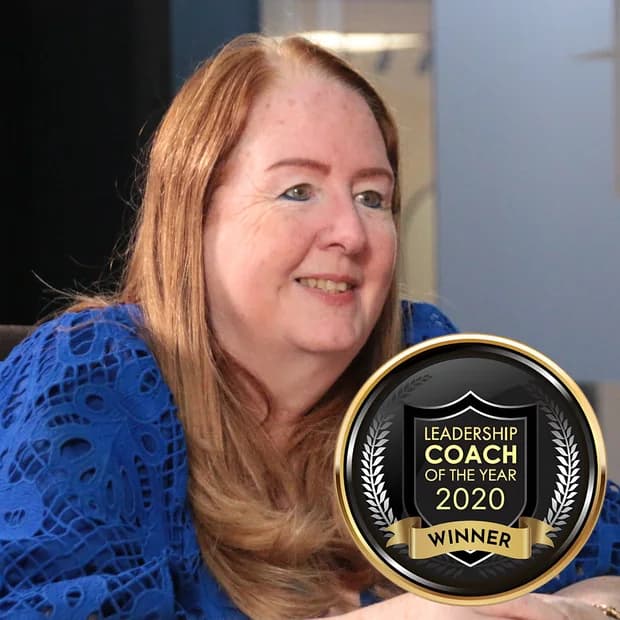
Mary Jensen is a Leadership and Performance Consultant, and a former Professional Coach and lifetime member of the International Coaching Institute. After three decades in senior finance roles across construction and manufacturing, she turned to the inner work of leadership and has spent the last decade training and guiding leaders. Named ICG Leadership Coach of the Year in 2020, her message is simple: leadership is not something you do, it is someone you become.
Join the email list and get the free How to Become a Successful Coach Starter Kit: an honest place to begin, sent straight to your inbox.
Want to go deeper? Join the free training, a warm, no pressure live session on what coaching really is, and whether it might be for you.
A one to one with a professional coach: a chance to gain clarity, set your goals, and plan your pathway. Book your free call today and start the conversation now.
Book your free call