Join the mailing list plus receive your free How to Become a Successful Coach Starter Kit.
Join + get your Starter Kit
Real people. Real stories. Real success. With Rashid Mubashir.
© 2026 How to Become a Successful Coach
Real people. Real stories. Real success. With Rashid Mubashir.
What eight coaches kept arriving at, from eight different directions.
This episode includes a discussion of domestic abuse and coercive control. If any of it is close to home, support is available. In Australia, 1800RESPECT on 1800 737 732 and Lifeline on 13 11 14 are free and open 24 hours.
A man spends twenty years telling himself he does not have anger, then drives into the bush and screams until he loses his voice. A woman sits at a cafe and says she will just have water, because she has no money of her own and nobody at the table knows. A manager asks for help controlling his people and, a year later, says he no longer has a scaffolding business, he has a personal development business.
This episode pulls together the moments that stayed with us. Eight coaches, each working somewhere different, arriving again and again at the same place: that what holds people back is almost never the thing they came in talking about.
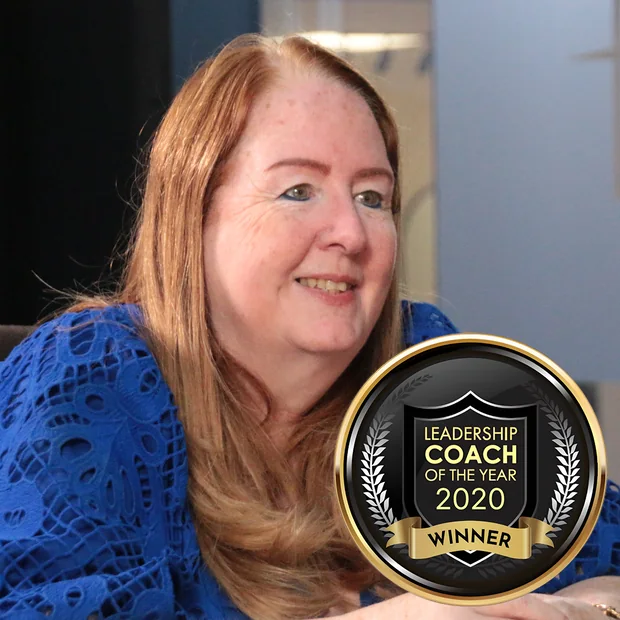
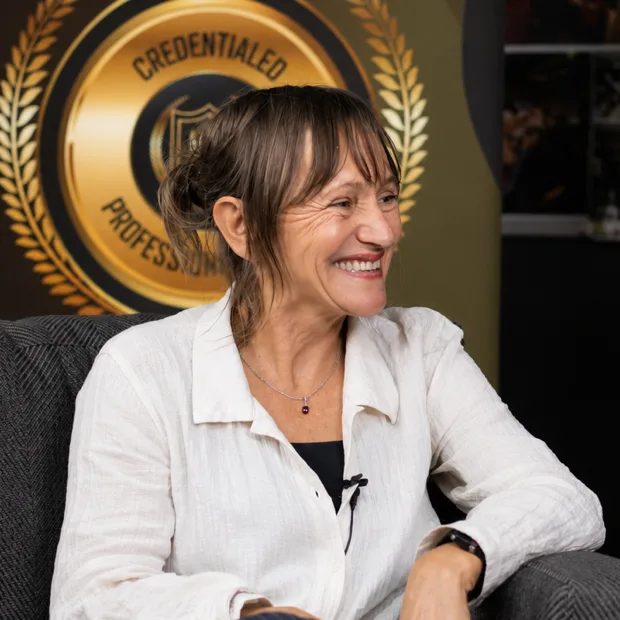
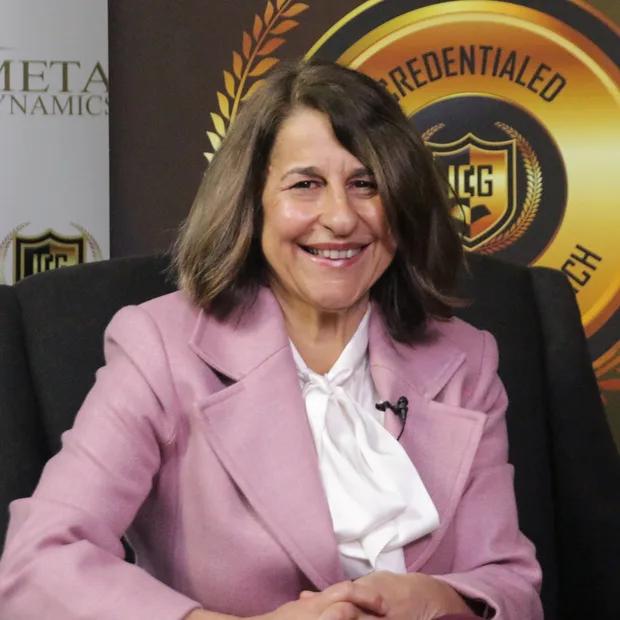
Andrea Buck opens on the masks we learn to wear in the first seven years, and the shame that arrives when we stop wearing them. Antonietta Muraca makes the case that net worth starts with self worth, and that women were taught to budget and never taught to invest. Marejka Knigge explains why the nervous system wins, and why most people talk themselves out of the thing they want. Nina Stanyer names the loop that runs on your core wound, and the simplest tool she has: asking for five minutes.
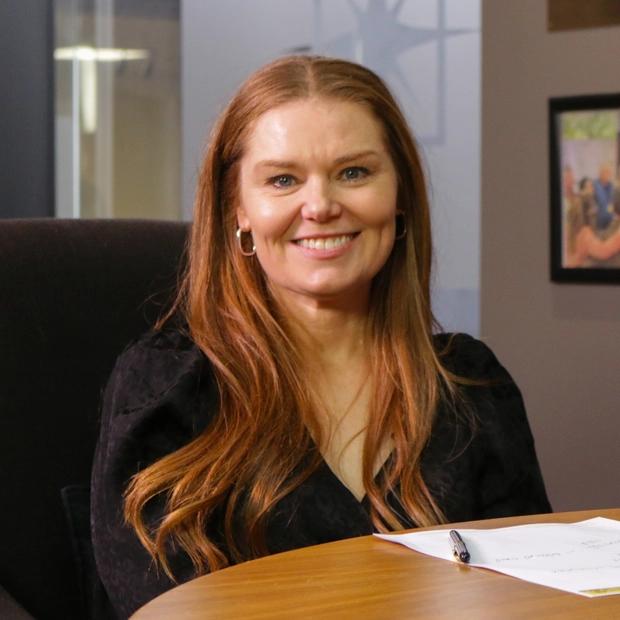
Then Marc Wiesner on every relationship as a mirror. Daniel Burgess on comfort, and the backpack of rocks a man carries thinking he is protecting everyone from it. Mary Jensen on the difference between managing and leading, and the moment she realised she chooses her own thoughts. And Remi Pearson on protest, retreat, and why staying through three storms is the pathway to healing.
If you are new to the show, this is the place to start. If you have been with us from the first episode, this is the thread that runs through all of it.
The mask goes on early. We learned that showing up exactly as we are was not safe, so we adjusted to fit the rules around us.
A woman is worthy of any seat at any table she chooses, and free to leave a table where respect is not being served.
Most people talk themselves out of growth. The nervous system pulls us back to safe, and safe is where the years go.
We all have a core wound. Naming it is hard, but changing the behaviour it triggers sends you somewhere new.
Every relationship is a mirror. What you cannot stand in your partner is often what you repressed in yourself.
Unexpressed emotion does not stay contained. It spills out as numbness, distance and passive aggression.
Management wants to control. Leadership wants to grow people, and grows you at the same time.
Whoever can walk away holds the power. Your work is to realise that the powerlessness you feel is the wound itself.
Prefer to read? Download the transcript, or open it right here.
Generally, people are wearing a mask because they're afraid of just showing up authentically with who they are. So it's the fear of judgment, fear of not fitting in. We have the opportunity to rewrite our own stories.
We have the opportunity to create a life that is aligned with our highest values. A lot of people will decide that they don't need anyone because if they only have to rely on themselves, then no one can hurt them, no one can reject them, no one can abandon them. But we do all have a deep human need for connection.
There's no more expectation in my life. There's no obligation in my life. There's no berating myself and shaming myself, because it will come up again because there's something in here I need to learn. And then I share it. And I think that that's what coaching and mentoring is all about. What we crave that is missing in these relationships, see me, hear me and be with me in my mess.
Men aren't just dealing with their emotions from this lifetime. They've got their pain and trauma from their dads, their granddads. And this has been proven through science.
What do I need to do to be a better leader? But the whole key is who do you need to be? It's in the being. People let you down. That's being human.
Can you be with yourself? Just that. Can you be with the turmoil? Can you sit through the tears? Hey, before we jump into this conversation, I want to ask you something. Have you ever wondered if you have what it takes to become a successful coach? Over 15,000 coaches have started their journey with us here at the International Coaching Institute.
And it all began with a simple step, taking a two-minute becoming a successful coach quiz. This is the kind of quiz that helps you become clear on where you are now and what's possible for you, where you can go if you choose to make a difference in the world as a successful coach. All you have to do is click the link somewhere down below in the show notes and it'll take you to this quiz that only takes a minute to complete.
Now, this might be the most important two minutes that you spend this week. Andrea Buck is a genius coach and a lifetime member of the International Coaching Institute. So Andrea, let's start the conversation with when you're working with someone who is experiencing self-doubt.
They are challenged in life. They may be even feeling like they're not good enough in some way. And they are putting this mask on, which all of us have done at some level in our lives.
What do you find is the reason why they're doing that? Why do people put on masks? What a great question. So, generally, people are wearing a mask because they're afraid of just showing up authentically with who they are. So it's the fear of judgment, fear of not fitting in.
People have been taught that it's not necessarily safe to just say things the way they are and show up who they are. So it's a fear of authenticity. And that is where the gold lies.
That's where the magic is. That's really interesting, because I would imagine that a lot of that perception of we're not safe, because we're not talking physical safety here. No, we're not.
Mental and emotional safety. I would imagine that a lot of that would happen as we're growing up in our conditioning, would you say? Is that your experience? Yeah, absolutely. It's that first seven years where we are a sponge, where we are just looking to see how we're supposed to be in the world.
So it's at that age, in your purity, you are curious, you're adventurous, you're courageous. You will make mistakes and not judge yourself for it. And you'll just get up and have another go.
And then, not intentionally, for the most part, we learn that we have to adjust to fit in to who we're supposed to be. And then that self-judgment, then the shame comes in when we're not showing up as who we were expected to be. Why does that happen? Why does shame come in when we don't show up as we're expected to? We're given the message that we're not good enough as we are.
From our caretakers? From our caretakers, from the culture around us. Generally, it'll be our caretakers, because in those first few years of your life, that's who you're spending your time with. And what are they getting wrong? Because that's the message that's being received by the child in the development age.
What are the parents or the caregivers getting wrong? In some way, yeah. We as a society, because this is something that's not only happened 40 years ago. This is something I still see it happen when I'm looking at parents, the rules of the tribe, the way things are done in the family.
This is how we do it in this house. These narratives are still around in a wide variety. Yeah.
What do you think is happening because of which we continue these narratives? Yeah. With families, with culture, with schools, with jobs, it's all a system. And to make the system work better, people have to follow the rules.
Rather than the system being created for the benefit of the individual, it's the individual must adjust and adapt to make the system flow better. What's the outcome of the system that we're looking for? Isn't that interesting? So in a family, the outcome is for an effective... Well, with a family, if you've got damaged parents coming in, they're going to have fear for the children. You want your children to do well in the world.
But also, you're going to teach them things that you think is going to bring them a better outcome in their life. So you start teaching them the rules of how to live well. Which is rules of survival in many ways.
Rules of survival, and then also rules of success and rules of functioning. Right? And they think, okay, so you've got to grow up as a person who's able to adapt and adjust to the environment around you. You've got to be able to lower your own expectations of your life.
And don't ask for too much, because you've got to be able to do a job that you might not enjoy so that you can make the money, so that you can pay the mortgage, so that you can fit into society. So the parents are teaching the kids what they think is going to be the best thing for them. When we send our kids to school, our schools were designed for the industrial age, where kids were sent to factories.
And they have to be part of that production line. So they've got to learn the rules of the game there. And now the world has changed so much.
The world has changed so much. And what I'm seeing now is that to be really successful, which means internally and externally, the best way to not be mediocre and just get by. Like we're talking about to be able to thrive, not just survive this world.
You need to be authentic. And that is what is being knocked out of us quite early on. Antonietta Muraca, who is a coach for women who want to become empowered and wealthy in their lives.
Antonietta, we're going to get straight into it. Let's start with, tell me what you mean when you do this work, when you say your net worth is determined by your self-worth.
Too often we think as women, we think that our net worth is actually tied to spreadsheets or budgets or numbers, but it is far more greater than that. It actually starts from within who we think we are, what we think we are capable of being and what we think we are capable of receiving. And we are all worthy of abundance.
That's beautiful. We are all worthy of creating wealth. Yeah, I love that.
Now I do have a question around that though. It sounds like a poetic way of saying, hey, you can be wealthy and you can have net worth if you know who you are within. And if you believe in abundance, but how does that translate practically into the real world? Like if I'm a mom right now watching this and I'm thinking, well, I think I have abundance and I think I believe that I want to be wealthy and I am worthy of being wealthy, but that doesn't show up in my assets or net worth.
I wonder whether it shows up in your everyday life. I would reverse that and say, how does that show up in your everyday life? Too often as women, we're to the outside world, we're holding it all together. But are we questioning ourselves when it comes to being capable of creating wealth? Do we question ourselves, or more importantly, do we distance ourselves from financial decision making in the family? For many generations, women have been running a family on the smell of an oily rag, and then we know how to budget.
But has anyone taught us how to invest? Has anyone taught us that, to look at our payslip, how to interpret it, how to look at our superannuation statement? The further we distance ourselves from the financial decision making, the further we distance ourselves from wealth creation and what becomes possible for us. And how do you relate that to self-worth, though? To self-worth, because often our net worth, money, is a reflection of how we feel about it.
Do we feel we are worthy of creating wealth? Do we feel that we are worthy of abundance? Do we think we're worthy of a pay rise? Do we feel that we are worthy of a right to any seat at the table? That's where this all started from.
A woman is worthy of any seat at any table she chooses, and she can also leave that table when respect or trust or whatever it is isn't being served at that table. Yeah, I agree. And so, yeah.
And so how we feel about knowing that we are enough as we are, knowing that we are worthy of making financial decisions on our own, having the confidence to just take action. We feel we need to have a lot to start investing, but we don't. It's just like going to the gym.
We don't build muscle overnight. We build muscle by taking small, consistent, disciplined steps. The same is true.
You don't need to have a lot of money to make financial decisions now. We just need to trust ourselves, to have confidence in that decision-making, and to take the small, disciplined steps, whether it be automating, whether it be increasing your super by even 1%. Those little steps can make such a difference because we have compounding.
It makes such a big difference to where we can be in the future, and it's never too late to start. We feel that. Many women feel that they've left it too late.
Marejka Knigge is a transformational mindset coach who works with women. Why do people hold themselves back from that? You just said because they've been holding themselves back. They've been doing it for others, but not for themselves.
Why? It's because of the fear. It's because they're scared that if they try something, that they might fail. That if they do something new, that they have to be uncomfortable.
They've been very, very safe in this small version of them for a really long time. Their nervous system is having a reaction. Their nervous system is letting them know that they're about to do something that feels scary for them.
It's, again, allowing them to be able to expand into these new versions of themselves. Yes, I love that. To all these fears and the response that we have in our nervous system, why are we not able to handle this? Why does someone need someone like you as a coach to be able to learn how to expand into this new version of themselves? People are battling and in conflict between this deep knowing that they have more in them, that there are new levels of themselves that they get to reach, and the version of them that says, don't do that, stay small, stay safe.
Let's just sit here where we're comfortable. Often, I find that there are two versions of them in conflict. We need to work with both versions of them working together and coming together to allow them to feel safe enough to try and to move into levels of discomfort.
That's also going to allow levels of growth they didn't actually believe were possible previously. Why do they need a coach for this? They need a coach because most people will stay safe. They will talk themselves out of growth even though they know it, but they will still be left with this deep sense of, I'm stuck, I'm dissatisfied, there's more, I'm not fulfilled.
I love what you've shared about how people's nervous system need the expansion. I'm a coach myself and I love this work. I am curious in your perspective, why do you feel that people today need a coach to help them through this? People will lean towards staying safe.
Their nervous systems and their subconscious minds will keep them safe more than it will lead them towards growth. Often, the version of them that wants to stay safe and wants to stay comfortable will win. The self-doubt will come up and the fear will come up.
What if I try this and it doesn't work? What if I lean into this and I have to feel inferior or I have to feel like I can't do it? Other people around me will judge me or I can't meet everyone's needs if I follow my own heart and try to meet my own needs. They need a coach to be able to lead them into the compassion and the love and the worthiness in themselves to know that they are allowed to have these things, that they actually can want more and that it's okay if it doesn't work out. Then they're just going to learn a new thing that gets to lead them to these new levels in themselves.
I love that. I'm hearing from your perspective, a coach is kind of like having a thinking partner. Absolutely.
Someone who can hold the space for you as well and expand with you and help you expand in your own space, which is fantastic. Marejka, when you're doing this work with your clients, I imagine you will have a lot of people come to you and say, hey, I have a goal, I have a dream, or I have some sort of problem that I want to resolve so I can have X goal in my life. It could be anything.
It could be I want a new job or I want to be a better mom or I want to start a business, any goal. What do you find is one of the most common reasons why people struggle to achieve their goals? People struggle to achieve their goals because firstly, it's around their mindset and their belief in themselves. So it starts there.
We always start with their big picture why. We use the critical alignment model, which is a model that we are taught at ICI. We're going to drop it for the views.
Amazing. So we always start with our why. So our vision and our values and the things that are actually internally driving us towards our external goals.
So we need to come back to why do I want this? Why is this the thing that is leading me forward? Why is that important? Everything comes back to that. If we're not clear on our why, well, firstly, we need to determine that it is actually a self-driven need, that it is a need that, again, aligns back with our authentic self. Yeah, it's not a borrowed or an injected idea.
That's right. So whenever I hear the word should, for example, I'm becoming aware that someone is probably thinking of a goal that aligns with someone else's version of success. Or some sort of narrative we learn from the outside world.
Exactly. So I should be this, I should be that. Okay, let's come back to what do you actually need? What do you actually feel is important? How do we align this back with your values? So values are really important as well.
Once we know that the goal that we are seeking aligns with our internal compass and what's important to us and aligns with our vision and our authenticity, then we're looking at the next steps in the critical alignment model, which is what structure do we need to follow? What do we need to put into place to get this goal moving forward to really give you the best chance for success for that? So then we'll work together on creating a structure. I then will suggest to my clients that they use me for accountability because then we're moving into implementation. And a lot of people will need to have someone to check in with.
They want to be celebrated. So if they're taking... We all do. We all do.
We all need that. We all need the gold star. We all need the pat on the back.
So having someone there to say, okay, this is what we're going to take action on this week. These are the actual steps that we're going to do on the ground. And then celebrate that, especially because a lot of the time, those steps are leaning into the discomfort and then leaning into the fear.
So we need to be able to be with that fear, allow it to be there, know that it's going to be there, and then take the step and the action and be celebrated. Nina Stanyer is a women's coach and mentor. We forget that we have every right in the world to put a hand up and say, I'm just going to come back to you on that.
Nice. Just give me a moment to think about that. I love that.
So simple, but powerful. Yeah, it is. It's just like, we forget that.
And I'll just get back to you. Can you just give me, just need to sort out a few things, or just need to look at a few things, however you feel comfortable saying it, giving yourself that breathing space to be able to step back and go, okay, so how do I really, how is this really sitting with me?
How do I really feel about this? And they think that they need to get the answer right now and snap it out. And then they come from a point of defensiveness.
And that in itself then takes away their choice. They feel they have no choice. Yeah.
I just love, in everything you're sharing, the role that our level of awareness has in this. You've got to be aware that that's what's happening in your body. That's what you need to do in this moment.
And that's what you are about to do. And that's where the trigger is. And that level of awareness is so important.
Because if we don't have that awareness, we won't even pick up on our compulsion to that external behavior that is bringing out control from us. Yeah. And we'll just run the cycle because it's survivalist in nature.
I call it the loop, right? So this is our core wound. We all have one. Mine is not being heard. And so when that's triggered, like I send a text message and you don't reply, that bangs up against my core wound.
And then I have the behavior. And that behavior then becomes, they don't like me, they haven't answered me, whatever. And it will swing back around.
And it keeps me within that loop. If anybody said to me, stop believing that you're not worthy or you're not being heard or whatever your core wound is, that's really, really hard. But if you change the behavior, it sends you on a different trajectory.
If you can feel within yourself, I can feel the anxiety coming up. I'm going to give myself five minutes. I'm going to not try and give the excuse why you're not replying to me, but just looking at the situation and going, here I go again.
This is the same behavior, the same feeling attached to this. When this happens, this happens. So I'm just going to sit with myself and go, it's okay, we're safe, we're fine.
And as soon as you change that behavior, trajectory goes elsewhere and you get out of that loop you're talking about. So at the heart of it, it's like developing that self-awareness when you're experiencing the wound and then learning how to self-regulate in that moment, or co-regulate if you have a healthy partner or healthy friend or someone around you as well. Yeah, exactly, exactly.
It's really powerful. And yeah, just having that awareness and just sort of sitting there and going, here it comes again. Listening to your body and the feeling, the sensations that you're having before your mind kicks in and starts giving you excuses as to why you're feeling it.
Yeah, just slowing down plays a big role. Yeah, I think that there's one of the things that I learned from being conscious of yourself and living consciously and living in the moment. And this is something that I teach or show my clients, is that the point of being here, like in the now, right now, where it doesn't matter what happened back there, don't worry about that.
Don't bring in what might happen up there because you don't know. So when you sit with right now, that is true gratitude. That is where you literally get to sit and smell the roses, because all as you have the capacity to deal with is what is happening now.
What happened back there happened. What's happening up there hasn't happened. What you can manage and where your capacity sits is with right now.
And once they get that and they start to feel themselves, what happened over there? Or this is happening again. It's like, no, no, no, no, no. What can you manage right now? What do you need in this moment right now? And this is where we need to learn to be and live.
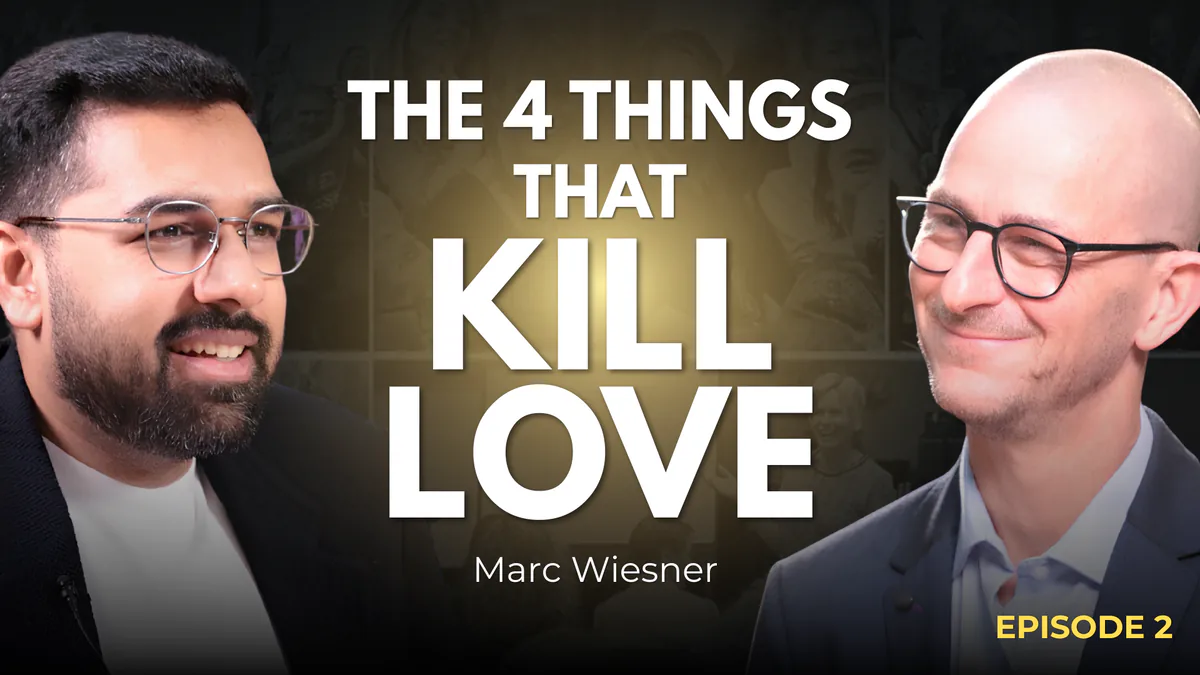
Marc Wiesner, who is a relationship coach from Melbourne, Australia. So whatever relationship we're in, it is a mirror reflection of where is it that we haven't yet seen those qualities within ourselves that we are admiring in our partner. And so that's really powerful, because that invites us to consider that every relationship, not just marriage, and I know that we're going to go deeper with that, but every relationship is a mirror, which is revealing to us the triggers, the wounds, the hurt that we are carrying, or like you said, the disowning of the qualities that we have within ourselves.
So from what you're sharing, then I'm understanding. So if we go back to the phases, which I really like, they're coming out of the honeymoon into the power struggle. So what's happening in that dynamic? Because we now know, okay, so we're two people here.
We like certain things about each other, but where is the struggle coming in? What's happening there? So I'm going to use an example of a couple that I worked with. It was quite a powerful shift. He had anger control issues and she had historically an aversion to anger. And in the honeymoon period, they didn't see this.
And then suddenly she's judging him for being angry because she's afraid of her anger. And he's starting to judge himself for expressing his anger. And so we start to see parts of our partner that we've repressed in ourselves, possibly unconsciously judging ourselves.
And so in this dynamic, when I'm working with a couple, it's like, okay. And this is one of these beautiful frameworks. There's nothing wrong with anger in its healthy form.
There's nothing wrong with fear in its healthy form. So let's start working with the individuals to start to heal that self-judgment, heal that pain and accept that, yes, there is a healthy expression of anger and start to love and appreciate that part of our partner once we can do it within ourselves. Nice.
I like that perspective. I really do, because what it does is it moves the dial from my partner needs to change. And it doesn't take away from the fact that in a relationship, sometimes both people do need to grow in different ways, which is very healthy.
But it does also, your perspective invites personal reflection. It invites this sense of how can I grow and be more to add to the relationship. And then hopefully that's reciprocated as well.
But I'm still curious. So how does that translate into this struggle? Is it that because there are so many of these emotions and so many of these aspects of ourselves that are disowned, that they just start to all come out and play towards each other? Is that what kind of happens? Or do you have a different view? Maybe take me deeper. Yeah.
Where do we go from there? So it's in the anxious and avoidant attachment style loop. The couple starts to get into these, the system gets into a loop where they stop being vulnerable with each other. Especially the avoidant.
Especially the avoidant. Yeah. So he might start running away from any confrontation and she will, potentially in this case, the anxious partner will chase.
And they just get into a self-defeating loop where the old patterns they don't know how to get out of them. And the vulnerability, this openness and connection, which they initially shared, they start to question this person that used to love these parts of me, they're now resisting them. And that creates even more pain and even more hurt.
And someone that you should feel close with starts to, you start to feel hurt by them. Daniel Burgess is a men's coach and he works with men from all different backgrounds, helping them embody healthy, masculine leadership. I understand that their society has changed and the expectations of what we were taught is perhaps valuable about us has shifted.
But why is it that we haven't been able to figure out what's the new version of it? Comfort. I think it's comfort. I feel men need to be challenged, men need to like tension, right? But men are so comfortable that they've become uncomfortable in the comfort.
Does that make sense? Because we have everything that we need. We can survive without challenge. We can survive without anything that pushes us to our limit.
But it's in that discomfort that men find themselves and they start to strive towards purpose. But men are so comfortable just living in the status quo. And then everyone around them is happy living in the status quo.
If there's a challenge comes up, they numb it with alcohol, porn, distractions, their phone, and that keeps them stuck. But in that comfort, there's incredible discomfort. Absolutely.
And through that comfort, they create the discomfort as well, through avoidance or blind spots of the impact that it's having. One of the things I've been really interested in is, and I'm curious on your thoughts, is what's the impact on people around them, particularly their wives, partners, women around them. What do you notice when you coach these men? How is their behavior impacting people around them? Well, I think what men don't realize is that by suppressing their emotions through all of these, you know, through alcohol, porn, drugs, distractions, their phone, they're suppressing their emotions, they're suppressing their anger.
So if they suppress anger, they're suppressing sadness, and they never truly express. So if they can't truly express, they can't connect. And I call it the backpack full of rocks.
So they're carrying around this backpack full of rocks of unexpressed emotions. And they think that by sheltering everyone from that backpack full of emotions, they're protecting everyone. But all they are doing is numbing out, and that creates disconnection with their wives, disconnection with their kids.
But they don't realize that that backpack spills over, spills over in the form of passive aggression, through numbness, through disconnection. And what that does is a man can't connect with his wife intimately, like physical or emotional intimacy, without having access to his own emotions. So there becomes this distance that starts to grow.
And then when the distance starts to grow, friction happens. And then what do most men do? And this is no judgment, I've done it, we've all done it, is we withdraw even more, and then the gap continues to grow. Yeah, absolutely.
So these men that you coach, how do you help them with this kind of stuff? And also for anyone who wants to work with men, what would you say is the starting point for any man? Because for a long time, any man who comes to a coach, and I've noticed this, even for women this is true, this is just a human condition thing, when you go to a coach, you've got blind spots. You're going there because you don't know what to do with where you're at. And you know there is another level of depth in you, maybe more love, more compassion, more kindness, more strength in you, in a more man language, if you like.
Yes. What do you feel is the starting point to help people transform when they are stuck in that burden of expectations from society, which are very unclear now with the world, the way it's changing? That's a great question. I think the starting point is always the same for anyone, whether it's a woman or a man.
I've coached many women, I've coached many high-performing women, many high-performing men, thousands, maybe 5,000, 6,000 hours of coaching, I don't even know. Stopped counting a long time ago. It's awareness. It's always awareness. It's like you talk about those blind spots, it's creating awareness of what's going on for them, like shining a mirror. That's what a great coach does.
A great coach holds a mirror up to someone. And it's not just a great coach. I think as you become better at coaching, you become cleaner in your energy to be able to be that mirror for them.
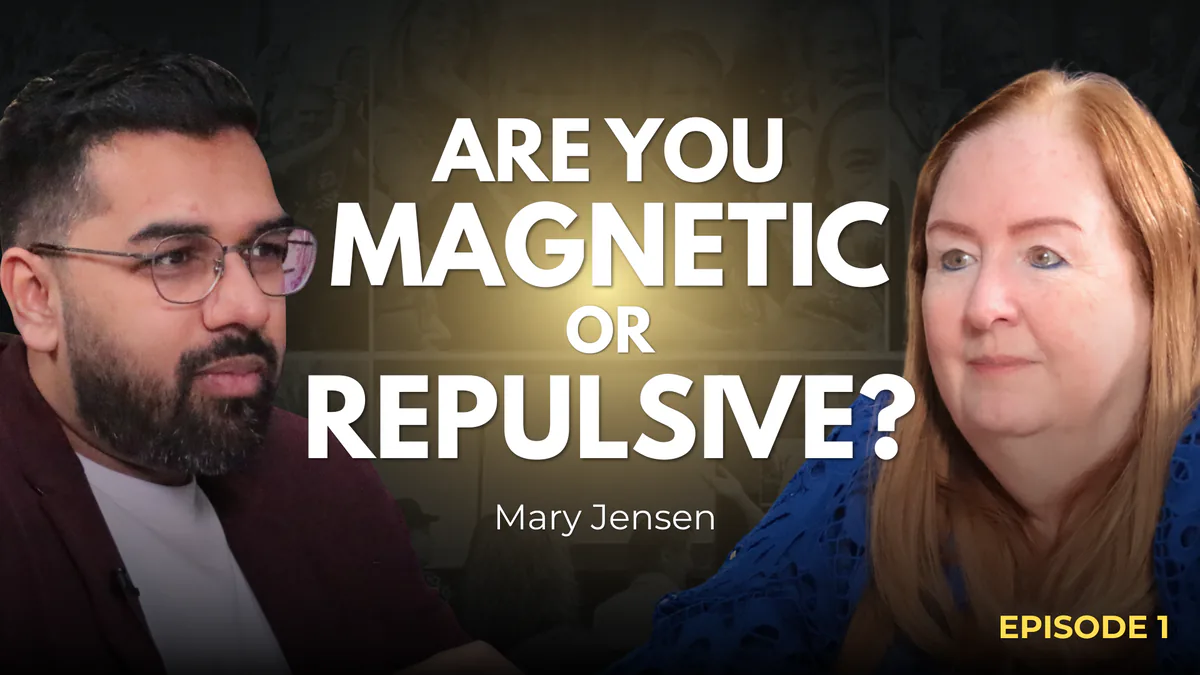
Yeah, it's like you create that space for them. Mary Jensen, who is a leadership and performance consultant. Mary is a former professional coach here at the International Coaching Institute as well.
I really love that analogy that you just shared about the magnets, because it's centered in the nature of who we are. It's centered in laws of physics. It's also true that there is an attraction between leaders and their team and people around them, or there is a repulsion.
And one way or the other, you've got to know where you stand and then you have to make a decision how you want it to be. And in terms of how we want it to be, I'm also hearing from you that two categories, the mental and emotional, presence, curiosity, listening is the mental and then emotional state. And would you say then these two things, if we start bringing into our awareness, how am I feeling and what emotional impact is that having on the room or people that we're with? And how am I thinking about this? These two categories will contribute to magnetism, and I imagine they do based on your nod.
So then maybe go a step further and go, how? 100% they do. But the true key is choice. Okay.
I talk a lot, keynote everywhere, and I truly believe anyone can change. Yeah. It's a choice.
Great. But my husband always says to me, what happened right back at the beginning? And he leaves at a point of time between he can bring you up again, and I'm like, I don't know, what happened back at the beginning? And then he goes, you chose to change. So you can lead a horse to water, but you can't make them drink.
Not every manager is going to choose to change. Some of them will be hooked in control forever. I want to talk about one particular client.
He runs a scaffolding company. And when we started working together, he said to me this sentence, which made me laugh. Mary, I want you to help me control my people.
Wow. And I said, hmm. The way he's thinking about that needs to shift.
Interesting concept, I said. At the one year mark, he said, he laughed. He said, Mary, oh my gosh, I don't even have a scaffolding business.
I have a personal development business. So can you imagine the different type of staff he hired when he thought he was developing people versus controlling people? And that's the big shift between management and leadership. Management wants to control, and leadership wants to grow and develop.
And in leadership, you're growing and developing yourself at the same time as you're growing and developing other people. That's really cool. So it's a shift in thinking, in how you view what people are meant to be doing and how they're meant to be.
Where does magnetism fit in there for a leader? I use my husband for content a lot. Sorry, Derek. But he gives me the opportunity.
Because I'm totally myself when I'm with Derek at home. I can't remember how long ago it was, but there was something that happened on a weekend that was the Friday night. And he did something that normally would have angered me for the entire weekend.
And I would have given him the cold shoulder, and I would have been irritable, and I would have been in all my mannerisms letting him know he did the wrong thing. I would have been in repulsion of that magnetism. But when it happened, I realised I choose my thoughts and I choose my energy.
I choose how I show up. Not what he did, because it's not what he did that irritates me. Although that may be the trigger.
It's my thoughts about what he did that continue the irritation. So I went, ah, to have a go back at him, and I realised I get to choose. And I said, actually, it's not worth my energy.
It's not worth me being in a mood. Because who does that impact? Me, for the whole weekend. And he said, so what, I get a free ride?
He knew he was getting off. So we get to choose. We get to direct our thoughts.
We get to learn that we can reframe any thought that we have to create a positive version or a negative version of what we're doing. The amazing, world-renowned... Thank you. Your friend.
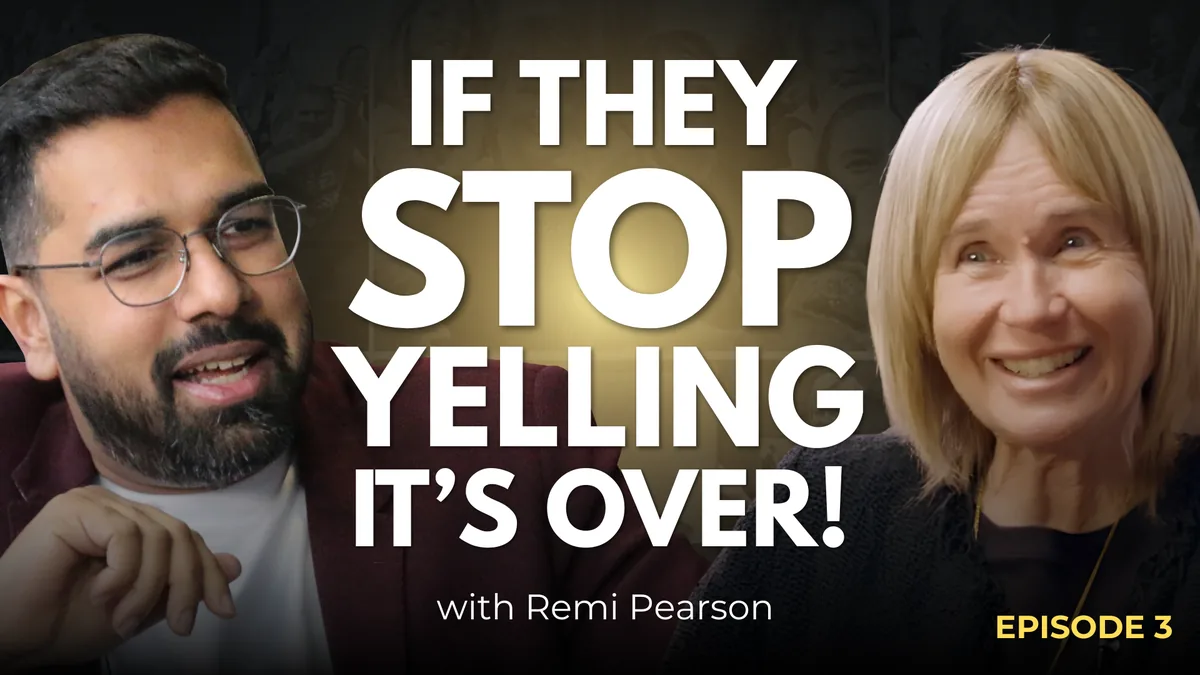
And my very dear friend, Remi Pearson. Get out of the pool. And if your DA doesn't come to the pool, you have your answer.
And now you've got to face grief and the devastation and the loneliness. And you reckon you were panicking in the pool? You've seen nothing yet. The panic you're going to go through getting out of the pool, it is so hard.
And that's why I encourage not to do it alone. Like, I have a whole bunch of things you need to do that we won't have time to go into. But getting out of the pool and staying out of the pool and realising you're the only one who's been in the pool for maybe a decade or more? That's devastating.
It's devastating and lonely. And meanwhile, your DA partner is still back in the house watching the footy, oblivious that you're out of the pool, thinking, oh, finally, some peace and quiet. Let me help you out if you're the DA.
And generally, it's the man. If they've stopped talking, it's done. Their relationship is dead.
Or was done. Protest proves there's still a chance. The moment the partner stops protesting, the relationship, there's no one fighting for it anymore.
They've given up. They're defeated. They're burnt out.
So AP burnout is a real thing. If they stop yelling, you're in trouble. You hear what I'm saying? If they stop yelling.
Now, a lot of attachment theory is, it's really important as the AP, you don't raise your voice. You don't raise it. Actually, if you're really hurt, how are you supposed to stay that calm? If you've got a DA partner who just walks away every time you're hurt or crying and goes, stop making such a fuss, or you're making too much of a big deal about it, you should be upset.
That's human. Yeah? Yeah. But if you're upset and you're, and I don't mean abusive, but if you're crying out, like I'm really hurting and they're nowhere to be found, you're yelling in the wind.
And that's really hard to face, but that's why I give it two days. And if no one shows up at the edge of the pool, you have your answer. And now the real work can begin, is how to heal from the abandonment wound you've been denying by yelling in the pool.
The reason you splashed was so you didn't feel your own loneliness. As long as you were trying and you had hope, you didn't have to face that devastation that there is no relationship to save. Now, you may be the one in 30 or 40.
Then when you get out of the pool, your partner goes, [expletive], it got a bit quiet. Where are you gone? They don't generally. They actually think.
And how, in 2026, when there's so many messages out there, how they could possibly believe the delusion that silence means peace, it means death. Your relationship literally officially just ended. All that's left to do is for her to pack or to tell you to do so.
That's all that's left. So that's why I say they've got the power. This is deeply insightful, Remi.
Yeah. And whether you're a DA or fearful avoidant or AP, whether you stay in the pool, leave the pool, whether both of them stay or leave, the work has to be done. That's the message I'm taking.
If we want to have a life where we feel securely attached with people, where we can have healthy relationships. With ourselves. With ourselves and the people that we love and people around us.
If we want to have a healthy reciprocity and connection and joy within ourselves and share it with other people, this is the work to do. It is. I love how deep we've got.
And I am sure we could talk for another three, four hours. Yeah. And we could do another episode, which is like three hours.
And I want to love on the DAs a little bit because I gave them a bit of a hard time then, because I said, well, they really have trouble hearing they've got the power and I don't want to leave them hanging. So if I can just add a little bit of a punchline to that. Yes, you've got the power the way I've just described.
So whoever can leave the negotiation table, ever in history, has the power. Whoever can walk away has the power. Your journey is to realise that that powerlessness is your wound.
And until you stay and face the storm, you will never realise you have power. Does that make sense? Yeah, it does. It's kind of like, well, if you realise you have power, then you have responsibility around that power.
And then you're okay to stay through a storm. You will know you are powerful, I mean, in the most loving way. You're empowered.
If you can stay through your wife's storm, true story, if you can stay through three of your wife's storms, she will stop storming. So all the things you've been worried about, the protest behaviour, the criticism, the yelling, if you can stick through three major, and I've got a whole technique for it, if you can stick through at least three of those storms, which is her hoping against all, that finally you will stay instead of running from her in her moment of greatest need. If you can stick, she'll start feeling safe.
If she starts feeling safe in her nervous system, she'll stop protesting. So you'll feel less need to retreat. If you feel less need to retreat, she'll get even safer and she'll start learning self-regulation.
You will heal. That's the pathway to healing. But until you stay, there's no healing.
Hey, I trust you're loving this conversation. I have something for you that I don't want you to miss. As a listener of How to Become a Successful Coach podcast, we would love to share with you a complimentary personal success and planning session.
It is a gift from me. It is a coaching conversation of the kind where you can explore how you can transform your life, how you can achieve the goals that you have, and perhaps also look at what might be holding you back in creating the life on your terms that you want. So if you are someone who's been thinking about becoming a successful coach and learn how to coach yourself and help other people, and you would love to have a deep conversation where you get supported and guided, I would love to invite you to go ahead, click the link down below somewhere in the show notes and take care of the bits and pieces and secure yourself a spot in this beautiful coaching conversation.
We're looking forward to supporting you.
Join the email list and get the free How to Become a Successful Coach Starter Kit: an honest place to begin, sent straight to your inbox.
Want to go deeper? Join the free training, a warm, no pressure live session on what coaching really is, and whether it might be for you.
A one to one with a professional coach: a chance to gain clarity, set your goals, and plan your pathway. Book your free call today and start the conversation now.
Book your free call